Kakobuy Winter Scarf Buying Archive
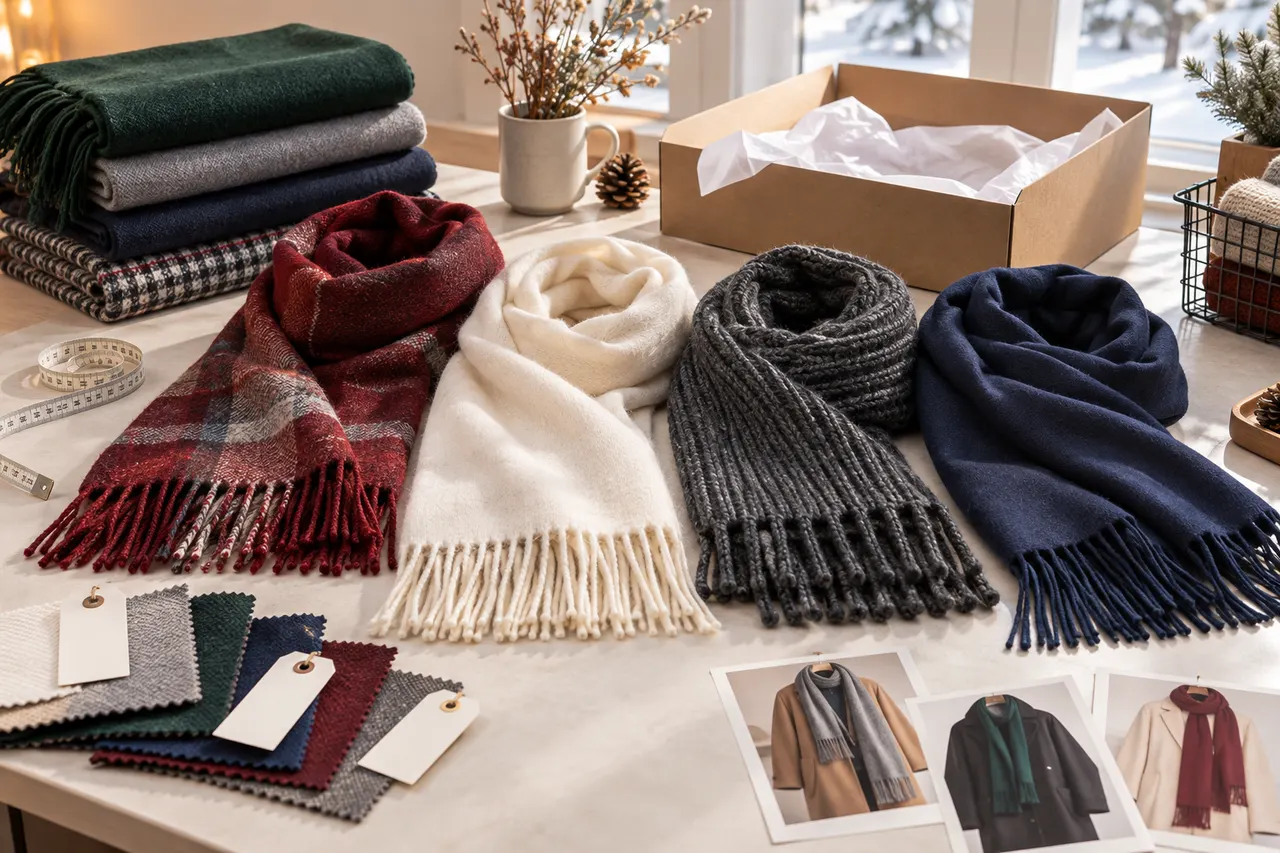
Caption: Use scenarios, dimensions, and QC-visible information to organize a kakobuy winter scarf candidate library.
The buying task a scarf candidate library should solve
Winter scarves may seem like small accessories, but when buying through kakobuy, the real challenge is breaking down "looks good," "warm enough," and "suits your wardrobe" into checkable information before ordering. This article's task is not to recommend a specific scarf, but to help you build a 3-item candidate library: one for commuting, one for travel or photos, and one as a warm backup for colder weather.
This article is for buyers who are using kakobuy to browse scarves, shawls, or knitted scarves on Chinese e-commerce platforms. After reading, you should be able to organize product page information, image clues, and inbound QC photos into a candidate table, then decide whether to order, return/exchange, or consolidate shipping.
We also need to clarify situations where this doesn't apply: if you need to confirm real cashmere content, actual warmth level, or whether your skin will be irritated, product images and QC photos alone are not enough. Kakobuy's inspection is more suitable for verifying appearance information such as style, quantity, color, size, and model, and does not equal laboratory material testing or wear-experience testing. Verification date: 2026-09-09. 🧣
What initial clues kakobuy product info can provide
In the kakobuy scenario, the first round of filtering should look at whether the product page provides recordable information, rather than being attracted by model photos or low prices. A scarf product that can enter the candidate library should at least have a clear product name, selectable colors, size description, material label or seller-provided composition statement, and sufficiently clear product images.
You can prioritize recording these clues:
- Whether the product title includes type words like "scarf," "shawl," "knitted," "thickened," "fringed," etc.
- Whether color options correspond one-to-one with images, to avoid only seeing atmosphere photos but not being able to confirm the order color code
- Whether the material column states wool, cashmere, acrylic, polyester, cotton, or blend ratio
- Whether the size gives length and width, or just says "one size"
- Whether the seller shows detail images, such as texture, edges, tags, packaging, and color difference explanations
Kakobuy provides purchasing, warehouse inspection, international logistics, and after-sales related services. According to known platform information, after the product is stored, there is usually a 5-day no-reason return/exchange window within 120 hours, but custom items, restricted items, intimate clothing, food, and items where the warehouse has been asked to remove packaging, tags, or accessories may not be supported. Whether a scarf can be returned or exchanged depends on the specific product and warehouse processing status.
Group by commuting, travel, and warmth needs
Don't sort the candidate library only by price. Winter scarves have very different usage scenarios. The same thick scarf might be suitable for outdoor photos but not for stuffing into an office drawer; a lightweight scarf might look good with a coat but not reassuring in low temperatures and strong winds.
It's recommended to first divide into three groups:
The commuting group is for daily matching with coats, down jackets, or blazers. Focus on whether the color is easy to coordinate, whether the length is convenient for one loop, and whether the thickness won't make the collar too bulky. Black, gray, navy, camel, and low-saturation plaids are usually easier to enter this group.
The travel group is for photos, airports, trains, and trips with large temperature differences. Focus on volume, shawl functionality, and ease of matching with multiple outfits. Large shawl scarves can provide both warmth and style, but may increase volume and weight when consolidating.
The warmth group is for colder regions or prolonged outdoor time. Focus on width, weave density, whether there is a thickened description, and whether QC can reveal the actual thickness and edge treatment. Here you cannot write "looks thick" directly as "actually warm"; it can only serve as a clue for further filtering. ❄️
| Usage scenario | Priority to record | Caution points |
|---|---|---|
| Commuting | Low-key colors, length, ease of storage | Too thick may affect collar and bag space |
| Travel | Large size, shawl usage, photo styling | Volume weight and checked luggage space may increase |
| Warmth | Width, weave density, thickened description | Images cannot prove actual warmth performance |
How to record material labels, length, and width
When building the candidate library, it's recommended to split each scarf into two columns: "seller claims" and "visible evidence." The seller writing "cashmere feel," "wool blend," or "imitation cashmere" does not mean the actual content is the same, especially distinguishing material names, hand-feel descriptions, and marketing terms.
Recordable fields include:
- Material label: Record the original text on the product page, do not rewrite it as a higher-grade material
- Composition ratio: Record percentage if available, otherwise write "not specified"
- Length: Record centimeters and note whether fringe is included
- Width: Used to judge whether it can be used as a shawl, or only for neck wear
- Weight: If provided on the product page, can be used to estimate international shipping, but final weight depends on warehouse weighing
- Color: Record the order color code, not just "picture style"
- Return/exchange risk: Whether there are custom, tag removal, special packaging, or other restrictions
In terms of length, short scarves are generally more neat and suitable for commuting; medium-long scarves are easier to loop; extra-large shawls are more suitable for travel and indoor-outdoor temperature differences. In terms of width, narrow scarves are more like accessories, and wide scarves provide more coverage. These judgments are for filtering, not absolute standards.
Look at weave, edges, and thickness feel in product images
The most valuable part of product images is usually not the model full-body shot, but the detail images. When filtering, you can zoom in on three areas: weave, edges, and thickness feel.
Weave can help judge style. Fine and even weave is more suitable for commuting; chunky knit and obvious texture are more casual or outdoor. Plaid, contrasting colors, and large logo patterns need to be evaluated for ease of matching existing clothes, to avoid only looking good in the product image.
Edge treatment affects durability perception. You can look for bound edges, fringes, rolled edges, overlocked edges, or obvious raw edges. Fringed styles have more styling appeal but also require checking in QC whether they are neat, have obvious broken threads, or inconsistent lengths.
Thickness feel can only serve as a visible clue. You can look at folded areas, fluffiness when worn by the model, shadows in flat-lay images, and edge thickness, but cannot assert actual gram weight, wind resistance, or down content from this. 🌨️
Visible details to check during QC stage
After the product arrives at the kakobuy warehouse, the QC stage is suitable for checking whether the appearance matches the order information. According to kakobuy's inspection rules, inspection mainly targets appearance information such as style, quantity, color, size, and model; some products with sealed packaging or sealed labels may not be opened, and only the outer packaging is checked for damage, and whether the arrival is incorrect is judged based on outer packaging information.
Scarf QC photos can focus on:
- Whether the quantity is correct, single or set
- Whether the color is close to the order option, noting screen and lighting can cause color difference
- Whether the style is consistent, such as plaid direction, fringe, label position, and edge treatment
- Whether there are obvious stains, holes, pulled threads, unravelled edges, or large-scale deformation
- Whether the packaging is intact and whether it affects return/exchange conditions
- If the photo includes a ruler or you can request additional photos, check key dimensions such as length and width
If color, quantity, or obvious appearance problems are found, try to process return/exchange communication within 120 hours after storage. Do not ask the warehouse to remove tags, packaging, or accessories in advance for better photos, as this may affect subsequent return/exchange eligibility.
Do not infer actual warmth performance from images
The easiest mistake with scarves is equating visual thickness with actual warmth. Product pages and QC images can show color, style, weave, edges, and obvious flaws, but cannot prove real fiber composition, long-term pilling, skin irritation, or performance in low temperatures.
Safer wording and buying judgment include:
- You can say "the image shows a relatively dense weave"
- You can say "the seller's page labels it as a certain material or blend"
- You can say "QC image shows neat edges or obvious pulled threads"
- You should not say "confirmed very warm," "definitely cashmere," "won't pill," "suitable for sensitive skin"
If you are sensitive to materials, prioritize products with clear composition labels, clear return/exchange conditions, and QC that can provide additional detail photos. If the product price is significantly lower than similar natural fiber scarves, put it into a high-risk candidate rather than directly treating it as a bargain. 🧵
Final action: Select 3 candidates by scenario
Finally, do not fill your favorites list. A more practical approach is to keep 3 candidates, each with a clear purpose.
Candidate 1: Commuting style. Choose a scarf with stable color, medium size, clear material label, and clean edge treatment. It may not be the most eye-catching, but it should be the easiest to use repeatedly.
Candidate 2: Travel style. Choose a larger size or more distinctive pattern scarf, but record the expected volume and weight risk. Consolidating may reduce duplicate first weight or operational costs, but may also increase volumetric weight, parcel value, and single-loss risk.
Candidate 3: Warm backup style. Choose a scarf with sufficient width, denser weave, and more complete page information. After ordering, focus on checking thickness appearance, edges, pulled threads, and color difference during QC, but do not treat images as actual warmth tests.
In terms of costs, kakobuy's total purchasing fee usually includes product cost, domestic shipping in China, international shipping, and customs declaration fee. International shipping is affected by weight, route, and destination, and customs declaration fee also varies by route. Known platform information shows that kakobuy offers multiple logistics routes and cooperates with UPS, EMS, DHL, etc., and also has some tax-free routes; specific timeliness and fees should be based on the page display at the time of order. Known exchange rate information is 1 USD approximately 6.22 CNY, suitable only for rough estimation; before payment, still confirm based on the platform's actual exchange rate and invoice. 💡
The conclusion is simple: Don't filter winter scarves only by "looks good" and "cheap." Put material labels, length, width, usage scenario, QC checkable points, and return/exchange window into the same candidate table to reduce the probability of buying the wrong style, color, or size. Those suitable for this method are buyers who want to buy 2 to 3 scarves through kakobuy and are willing to do basic recording; not recommended for those who need guaranteed real natural fiber content, medical-grade skin-friendliness, or definite extreme cold warmth performance.
Agent platform shopping FAQ
1. Is there a security risk in handling spreadsheets on kakobuy?
Kakobuy's spreadsheet page does not collect any personal data; it only serves as a product catalog on the agent platform. All transaction operations are completed within the kakobuy agent platform.