Kakobuy Travel Bag: Site Spreadsheet vs Google Sheets
Defining the Travel Bag Candidate and Update Verification Task
When you need to continuously search for travel bag candidates, the real problem isn't "can I get a page of results," but how to tell if a candidate is still valid, if the link still works, if the page information has changed, and if team members can re-check using the same criteria. 🧭
This article is for people who already have initial candidates and need to update their records regularly. After reading, you should be able to do four things: first discover candidates in Kakobuy's website-based Spreadsheet, then organize the necessary information into Google Sheets, filter by link and date, and finally go back to the page to verify specs and status.
This article does not apply to scenarios requiring real-time confirmation of inventory, logistics, taxes, after-sales policies, or specific product quality. Public pages can only support verification of page-visible information and cannot replace final confirmation before ordering.
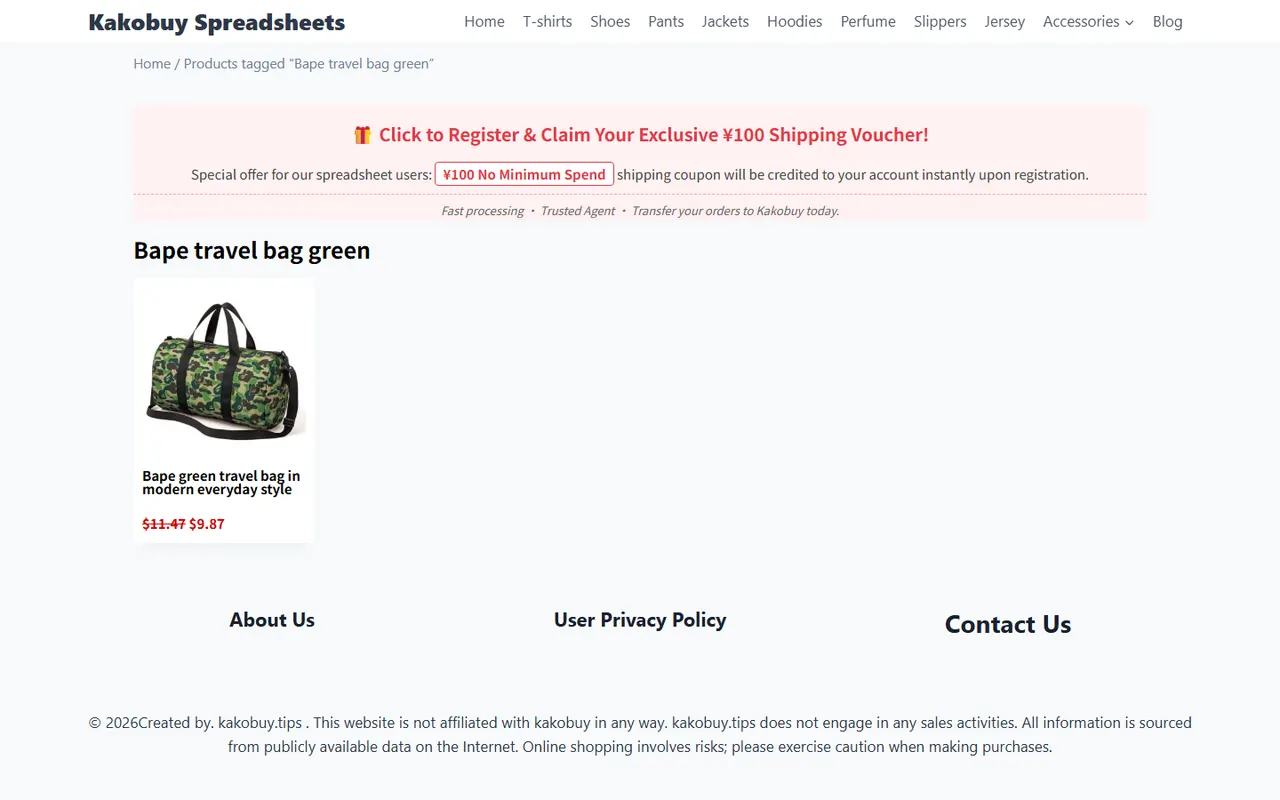
Keyword and Category Search in Kakobuy's Website-Based Spreadsheet
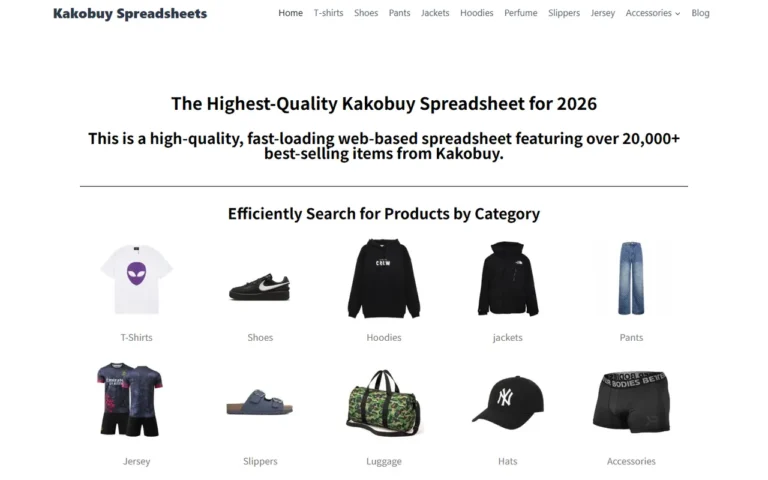
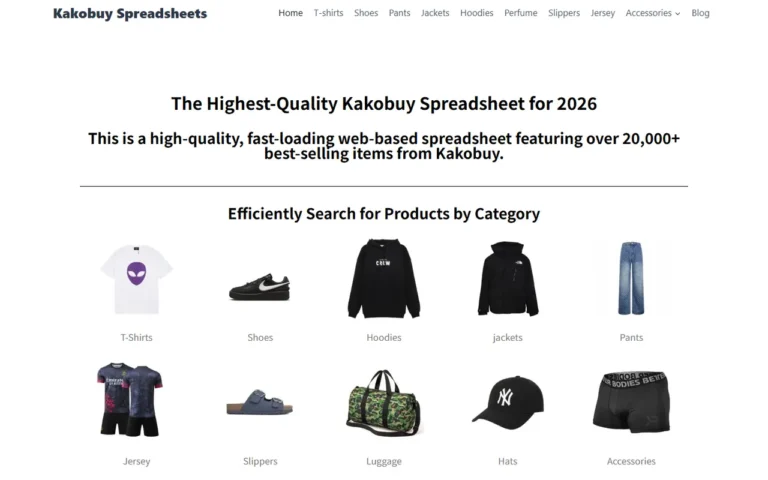
The Spreadsheet on Kakobuy's website is better suited as a discovery entry point. After entering, you can first narrow down from public categories like luggage and accessories, then use the keywords or tags provided on the page to find relevant candidates. 🔎
It's recommended to first define a clear search task, for example:
- Only look for travel bag candidates suitable for short trips
- Only record one capacity or structure direction
- Only keep pages that open and show a clear name
- Only organize candidates that still need further verification
Don't mix all categories at the beginning. First fix one category, then record items one by one. This reduces duplicate candidates and makes it easier to later determine whether a record is a new discovery or an update to an old page.
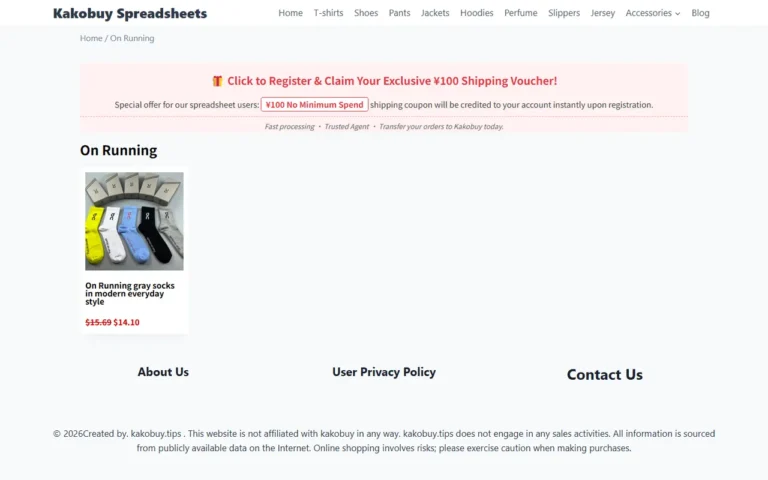
In the website-based Spreadsheet, prioritize observing the content actually visible on the page: category names, candidate titles, page entry points, and public descriptions. Don't fill in fields that don't appear on the page, and don't treat speculation from search results as confirmed facts.
How to Filter by Link and Date in Google Sheets
Google Sheets is better for long-term maintenance, not a replacement for Kakobuy's discovery page. After adding initially screened candidates from the website to the sheet, keep at least the following information:
- Candidate name
- Page link
- Source category or search term
- First recorded date
- Last verified date
- Page status
- Items to confirm
- Review notes
Date fields should distinguish between "first recorded date" and "last verified date". The former answers "when was it discovered", the latter "when was it confirmed the page is still accessible". If you only keep one date, it's easy to mistake old records for new updates later.
You can use filters to view candidates verified after a certain date, or filter rows where page status is "pending review" or notes are incomplete. For the link column, keep the original page URL, not just search terms, because search terms can't prove which specific page you checked.
If multiple people maintain the sheet, it's recommended to note in the comments what changed each time, such as "title changed", "page still opens but description reduced", or "link redirects to a different page". This is easier to trace than simply overwriting old content. 📅
Mapping Product Card Information to Spreadsheet Row Fields
Cards or list information on the website page should be mapped item by item to Google Sheets fields, not copied in bulk into notes. The mapping can be set up as follows:
| Website visible information | Google Sheets recording method | Verification requirement |
|---|---|---|
| Page display name | Candidate name | Keep current page text, don't rewrite from memory |
| Page entry | Page link | After opening, confirm it's not a blank page, error page, or unrelated category page |
| Category or tag | Source category or search term | Record the discovery path for this time |
| Page public description | Page summary or verification note | Distinguish original information from personal judgment |
| Page check time | Last verified date | Use actual check date, not old date |
If a field is not shown on the page, write "not displayed" or leave blank in the sheet and explain in notes, rather than guessing material, capacity, size, or function based on images or names. 📝
Also, field names in the sheet should be stable. Don't use "update time" today and "check date" tomorrow, otherwise filtering and statistics will be confusing. For content that cannot be confirmed, set up a separate "items to confirm" field to keep uncertainties recorded.
Comparing Operational Differences: Quick Discovery vs. Long-Term Maintenance
The website-based Spreadsheet and Google Sheets have different roles. The former is better for discovering public candidates, the latter for saving verification results, scheduling re-checks, and handling duplicate records.
Searching on the website is usually faster because categories and page structure are already organized; but it may not retain your personal judgments or record when you last checked. Google Sheets requires more manual entry and updating, but can keep filter conditions, review dates, and team notes.
Therefore, a more reliable approach is to discover first, record second, then re-check:
- Select a clear category in Kakobuy's website-based Spreadsheet.
- Only record candidates with clear page names and working entry points.
- Add the link and source information to Google Sheets.
- After completing a page verification, fill in the last verified date.
- Filter rows that need re-checking by date and status.
Don't treat "already added to the sheet" as "verification completed". Recording and fact confirmation are two different stages.
Checking Links, Specs, and Page Update Times
When re-checking, first open the link, then check whether the page still corresponds to the original candidate. Pay special attention to the following situations:
- Page cannot be opened or shows an error
- Page redirects to a different category
- Page name does not match the original record
- Public description has changed
- Previously visible spec fields are no longer displayed
- Page does not provide a confirmable update time
If the page has no clear update time, do not infer "updated today" or "recently updated". You can just record your verification date and note "page does not show update time" in the notes. This preserves evidence of checking and avoids mistaking the check date for the platform update time.
Spec verification should be based on the current visible text on the page. Images can help identify page layout and general category, but cannot alone prove size, capacity, material, or function. If text and images conflict, mark the row as pending confirmation instead of drawing conclusions for the page. ⚠️
Handling Duplicate Candidates and Inconsistencies
Duplicate records usually come from different keywords, categories, or repeated discoveries at different times. Before merging, compare page links first, then page names and public descriptions. Only merge records when you can confirm they point to the same page.
It's recommended to keep one primary record and save other discovery paths in the notes. This reduces sheet duplicates without losing keyword and category information. If two links have similar names but different page content, keep them separate for now.
When information is inconsistent, don't overwrite one record with another. Process in the following order:
- Reopen both pages and confirm they are still valid.
- Compare current page names and descriptions.
- Record the verification date to avoid mixing old and new information.
- Write differences that cannot be judged into the items to confirm.
- Wait for the next re-check before deciding to merge or close old records.
The value of this method is preserving the judgment process. It may not make the sheet look the cleanest, but it reduces the risk of mistakenly deleting candidates and using outdated information.
Combining Website and Sheet for Final Review
The final review can be done in two rounds. First round, go back to Kakobuy's website-based Spreadsheet to confirm candidates are still findable through categories, keywords, or page entry points; second round, open Google Sheets to confirm links, dates, status, and notes are complete and consistent.
After completion, each retained record should at least meet: page entry opens, name matches the original record, source path is traceable, last verified date is clear, and unconfirmed content is marked. ✅
If you just want to quickly discover candidates, the website-based Spreadsheet saves time; if you need long-term maintenance, multi-person collaboration, or regular re-checks, Google Sheets is more suitable. When combining the two, you save time on repeated searches and repeated judgments, but the added risks are missed manual syncs, old links not closed, and mistaking page-visible information for real-time facts.
This solution is suitable for people who need to continuously organize candidates, can re-check links regularly, and are willing to keep verification records. It is not recommended to make final purchase decisions based solely on sheet records when re-checks cannot be scheduled, real-time inventory confirmation is needed, or page information is insufficient to support judgment.