Kakobuy Kitchen Finds: Mobile Spreadsheet & Image Preview
When hunting for kitchen gadgets on mobile, the real problem isn't seeing as many items as possible—it's saving the candidates you've reviewed and filling in images, dimensions, materials, and page info before ordering. This guide is for users who browse Kakobuy's website Spreadsheet on mobile while building a candidate list in Google Sheets. By the end, you'll be able to keep multiple candidates, flag missing info, and know when to pause judgment. 📱
Define Your Kitchen Gadget Purchase Task on Mobile
Start by narrowing the task to one actionable goal: browse kitchen-related categories on mobile, pick out several possible candidates for your purpose, then verify each one's images, dimensions, materials, page status, and link accessibility.
This workflow isn't for situations where you've already locked in specific specs, need to order immediately, or rely on undisclosed parameters for safety decisions. If a page only has a thumbnail, the name is too vague, or you can't confirm food-contact safety info, save the candidate and don't buy directly. 🔎
How to Enter Categories and Preview Images on Kakobuy's Website Spreadsheet
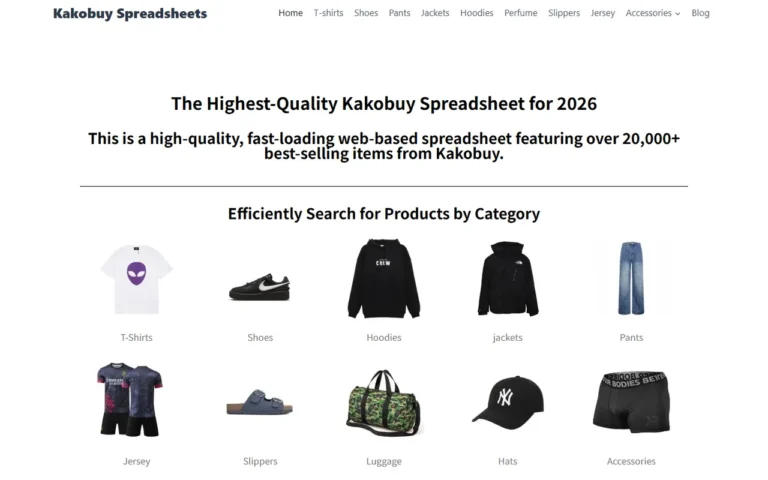
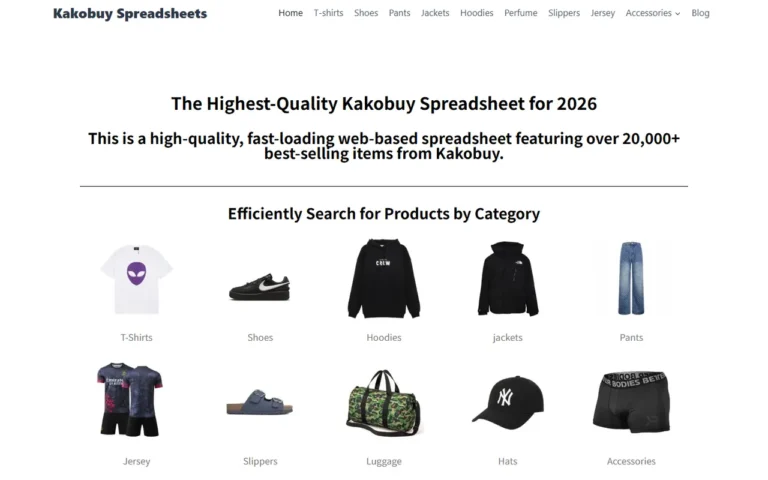
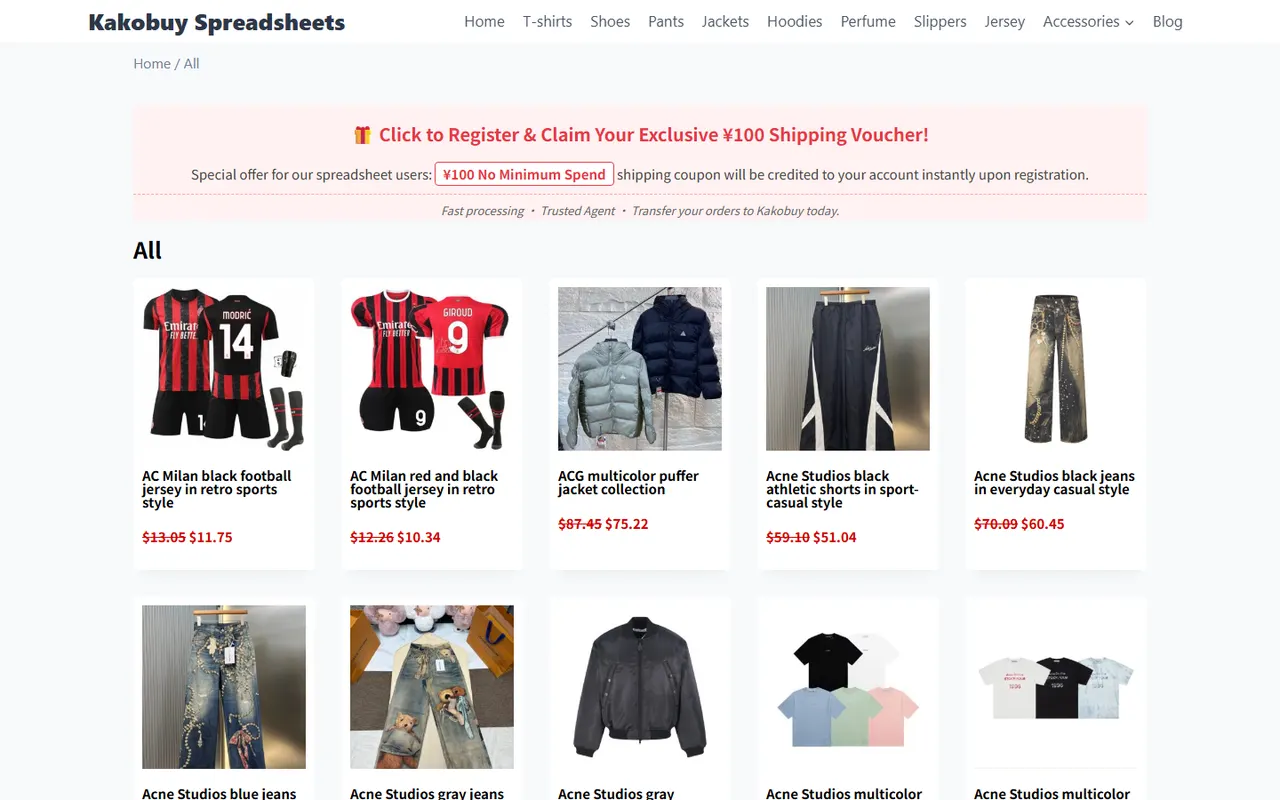
After opening Kakobuy's website Spreadsheet, first look for category entry points at the top of the page or in the menu. The provided screenshots show a catalog with multiple product categories and an entry to view all content. On a narrow mobile screen, you may need to expand the menu first, then select the category closest to your kitchen use.
Once in the catalog, do an initial filter by image and visible name, but don't assume use, material, or dimensions just from a similar thumbnail. The catalog page is good for discovering candidates, not a replacement for checking individual pages.
Work through a small batch of candidates at a time:
- Check if the image shows the main structure and usage scenario.
- See if the name indicates the category or purpose.
- Note whether the page opens and if there's any obvious spec info.
- If info is insufficient, save it as "needs verification"—don't fill gaps with guesses.
Display order, visible info, and page status may change. Recheck pages before publishing or ordering. 🧭
How to Set Up Name, Dimensions, Material, and Link Columns in Google Sheets
Google Sheets serves as an external candidate tracker here, not part of Kakobuy's official pages. Create a new sheet and use one row per candidate.
Set up at least these columns:
- Candidate Name: Copy the visible name from the page. If uncertain, keep the original text; don't rewrite it as a definitive conclusion.
- Image Status: Note whether you can see the main structure, or mark it for a closer look.
- Dimensions: Enter dimensions clearly shown on the page; write "not shown" if absent.
- Material: Only fill this in if the page explicitly states it; don't infer from color, texture, or image.
- Page Link: Save the candidate page URL for later review.
- Info Gap: Specify what's missing—dimensions, material, capacity, compatibility, or other.
- Review Status: Use simple labels like "to review", "verified", or "paused".
On mobile, prioritize completing one candidate record before moving to the next. Don't merge multiple candidates into one cell just to save time. Clear records make filtering and reviewing easier. ✅
Steps to Zoom Images, Scroll Lists, and Return to Search Results on Mobile
When viewing images on mobile, follow this order:
- Open a candidate from the catalog page and check if it loads properly.
- Tap or zoom the image to see the structure, connectors, size markings, and accessories clearly.
- Scroll down and record any explicit name, dimensions, and material info from the page.
- Go back to Google Sheets, add confirmed details, and write unknowns in the "Info Gap" column.
- Return to the catalog or search results and continue with the next candidate.
If you lose your place after going back, reopen the saved page link rather than searching from memory. Back button, in-page return links, and catalog menu behavior vary by device and page state, so don't assume one method works identically on all phones.
Zooming only helps you see displayed content—it doesn't prove material, heat resistance, food safety, or actual dimensions. Anything not explicitly labeled in the image should stay unverified. ⚠️
How to Keep Multiple Candidates and Flag Missing Info
Don't settle for just the one candidate that looks best. It's safer to keep a few different options and record the same fields for each. That way, if a page goes dead, specs are missing, or images are unclear, you won't have to start from scratch.
Use simple markers:
- Verified: Page accessible, key fields have clear evidence.
- Needs info: Page accessible, but dimensions, material, or other key fields are missing.
- Image pending: Thumbnail insufficient to judge structure; needs zoom.
- Paused: There's important unknown info affecting the purchase decision.
- Page broken: Can't access normally, or content insufficient for comparison.
"Needs info" doesn't mean "meets requirements", and "Verified" only means the record has page-based evidence. Don't turn status labels into quality or safety claims.
Boundaries Between the Website Catalog and Google Sheets
Kakobuy's website Spreadsheet is for discovering and opening candidate pages; Google Sheets is for saving your personal comparison notes. The former provides page content, the latter helps organize your judgment—they don't replace each other.
Catalog pages don't guarantee stock, dimensions, material, seller info, or continuous availability. Google Sheets won't auto-verify those facts unless you reopen the source page and check each item. In your sheet, distinguish between "explicitly stated on page" and "user unverified" to avoid mistaking your own notes for official data.
If you share the sheet, check for personal order info, addresses, contact details, or other unnecessary privacy data. Keep only the fields needed for candidate comparison. 🔐
When to Pause Judgment if Material or Specs Can't Be Confirmed
Kitchen items involve size fit, capacity, cleaning, heat resistance, and food contact. Inferring from images, names, or appearance alone can lead to wrong choices.
Mark a candidate as "Paused" when:
- The page has no clear material description.
- Images don't show key structure or contact surfaces.
- Dimensions, measurement method, or capacity aren't stated.
- Page name contradicts image content.
- Page won't open, or key info is in unreadable areas.
- You'd have to guess to decide if it's suitable.
Pausing isn't giving up—it's keeping the candidate until verifiable info appears. If key fields remain missing, remove it from the final list.
Pre-Order Candidate Review Checklist
Before ordering, go through each final candidate row:
- Page link still works.
- Name matches image content, or at least doesn't conflict.
- Main use fits your actual needs.
- Dimensions or capacity are clear, and units are read correctly.
- Material comes from explicit page text, not image inference.
- Missing fields are resolved, or you've decided to drop the candidate.
- Google Sheets notes match current page content.
- You haven't mistaken catalog display info for stock, quality assurance, or safety certification.
Don't inflate the final list just to have more. A small number of complete, revisitable records beats a large pile of image-only, vague-name entries. After checking, proceed to the platform's allowed purchase steps; if key facts remain unverified, hold off on ordering.