What Kakobuy Does for Shoppers
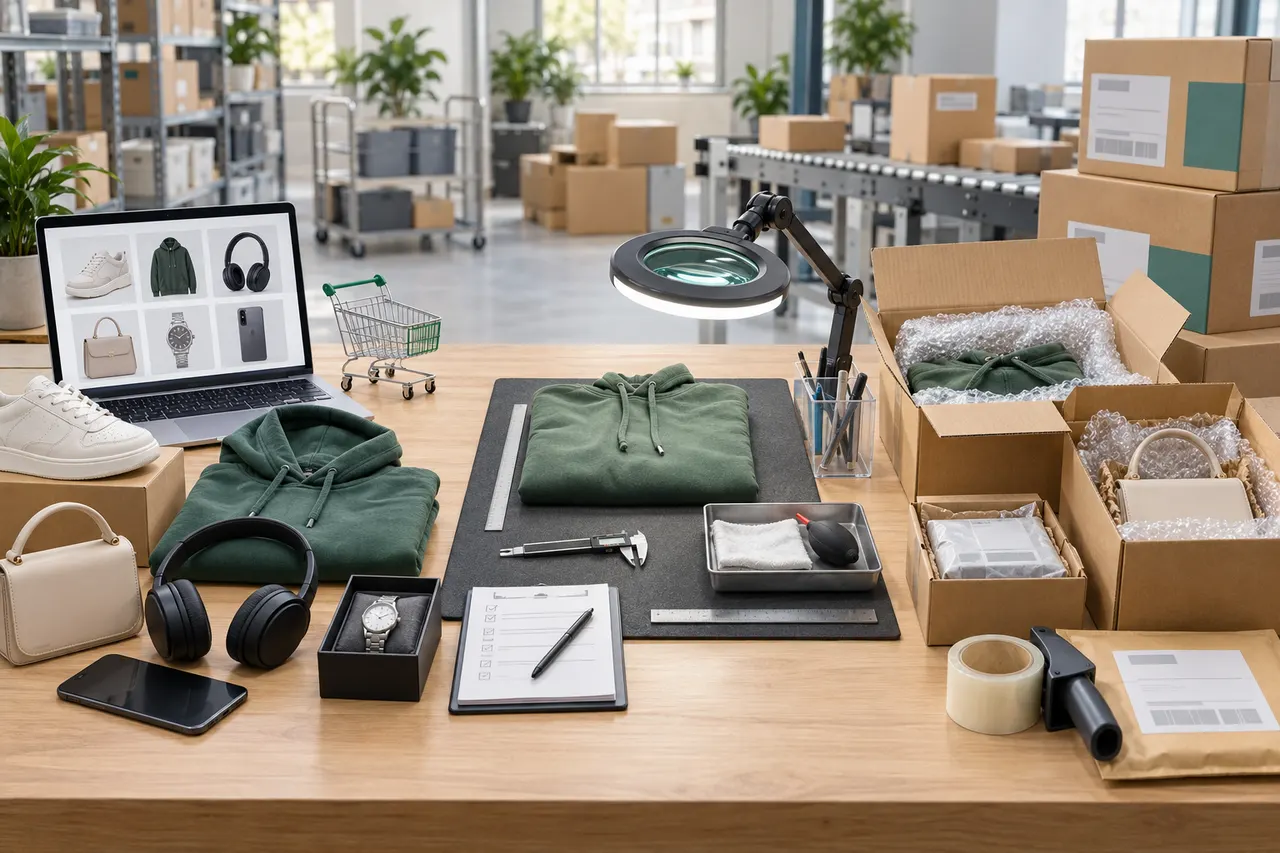
Caption: Overview of the purchasing, quality inspection, and forwarding roles in the kakobuy shopping process.
What Users Really Want to Confirm
Many users, before using kakobuy for the first time, aren't really trying to confirm "is this platform good?" but rather what part it handles and what decisions they still need to make themselves. This is a very practical concern: if you mistake a purchasing agent platform for a seller, an authentication service, or a customs clearance guarantor, it's easy to make wrong judgments later when you encounter size mismatches, material discrepancies, shipping delays, extra taxes, or missed after-sales windows.
This article summarizes kakobuy's service positioning based on information available as of 2026-09-08. Kakobuy publicly positions itself as an online service company for purchasing Chinese goods, freight forwarding, and quality inspection, helping overseas users buy products from Chinese e-commerce platforms and handle warehousing and international shipping processes. It's more of a service intermediary in the purchasing and forwarding chain, not a brand owner or final quality guarantor.
After reading, you should be able to do three things:
- Determine whether to contact the seller, kakobuy warehouse, or shipping route for a specific issue.
- Prepare correct product links, specifications, notes, and risk expectations before ordering.
- Make more conservative decisions before inspection, returns, consolidation, and shipping.
This article does not apply to situations requiring legal action, customs appeals, payment chargebacks, or high-value commercial procurement audits. Those require separate handling according to destination country regulations, platform agreements, and payment institution rules.
Kakobuy's Three Roles in the Purchasing Chain
Kakobuy's services can be broken down into three consecutive roles: purchasing agent, quality inspection, and freight forwarder. They occur within the same order but have different responsibility boundaries.
During the purchasing phase, the user submits product information from a Chinese e-commerce platform, and kakobuy assists in purchasing from the seller. The core here is "executing the purchase according to the user's selection," not judging whether the seller is necessarily reliable, nor guaranteeing that the product meets overseas consumers' expectations for brand, material, or fit.
During the quality inspection phase, after the product arrives at kakobuy's warehouse, the warehouse checks visible information such as style, quantity, color, size, model, and conducts prohibited item screening. This phase is suitable for discovering obvious errors, missing items, color inconsistencies, damaged outer packaging, etc., but it does not equal professional authentication or deep functional testing.
During the forwarding phase, the user selects an international shipping route, declaration information, and parcel handling method, and kakobuy sends the goods from the warehouse to the destination. Known information shows that kakobuy offers multiple shipping routes and cooperates with carriers like UPS, EMS, and DHL, including dedicated lines for cosmetics and electronics, as well as some tax-free routes. The transit times, restrictions, billing methods, and customs performance of different routes can vary, and you should refer to the real-time page display before shipping. 🚚
What the Purchasing Phase Can Solve and What It Can't Decide for You
The purchasing phase is best for solving the problem of "I can't easily order directly from Chinese platforms while overseas." Users typically need to provide the product link, specifications, color, size, quantity, notes, and pay for the product cost and domestic shipping within China. According to available information, kakobuy's total purchasing fee can be understood as three parts: product cost, international shipping, and customs declaration fee. The product cost includes the product price and domestic shipping, and the customs declaration fee is generally 8 RMB, depending on the shipping method.
It's important to note that using a purchasing agent doesn't turn an ordinary seller into an official channel. The seller's inventory, shipping speed, product version, size labeling, material description, and after-sales attitude still come from the original sales page and the seller themselves. Before ordering, users should check:
- Whether the product link is still accessible and has a clear name, specifications, and price.
- Whether color, size, and model are clearly specified through options or notes.
- Whether the seller's page indicates pre-sale, customization, non-returnable, additional payment, or random shipping.
- Whether the item falls under restricted import categories for the destination country, such as liquids, cosmetics, batteries, electronics, food, or brand-sensitive goods.
Kakobuy's known exchange rate information is 6.22, but exchange rates, payment channels, fees, and coupon status are highly volatile. Before ordering, you should refer to the checkout page display and record the verification date. 💳
What the Quality Inspection Phase Can Catch in Terms of Visible Issues
Quality inspection isn't a universal guarantee, but it's a very important check for overseas users using a purchasing agent's warehouse. Kakobuy's inspection rules mainly cover visible information such as style, quantity, color, size, and model, and check for prohibited item risks.
This phase is suitable for catching the following issues:
- Quantity received doesn't match the order quantity.
- Color, size, or model clearly doesn't match the user's submitted information.
- Outer packaging has obvious damage, dents, or abnormalities.
- Seller sent the wrong style, or accessories are visibly missing from the outside.
- The product is identified as a restricted item that may affect warehousing or international shipping.
But warehouse inspection also has limits. For sealed packaging, as well as non-clothing, bags, and shoes with seal labels or strips, the rule is not to open the package for inspection, only check for external damage and use the outer packaging information to judge if the wrong item was received. Therefore, for sealed electronics, cosmetics, collectibles, food, or items with seals, you cannot expect the warehouse to open them for functional testing, smell judgment, material feel, or authenticity verification.
If you are purchasing high-value items, a conservative approach is to write very specific inspection instructions. For example, instead of just writing "please check it for me," write "please verify if the size label is 42, the color is black, the shoe box is severely damaged, and the accessories are visibly complete." This makes it easier for the inspection to focus on actionable items. 🔍
What Choices Users Need to Make in the Freight Forwarding Phase
After goods are in the warehouse, kakobuy's role shifts from purchasing agent and warehouse processing to freight forwarder. At this point, users typically need to decide whether to consolidate parcels, which international route to choose, how to fill in declaration information, whether to accept volumetric weight billing, and whether to pay higher costs for speed, stability, or tax expectations.
Known information shows that kakobuy offers a fairly rich selection of shipping routes, with delivery times ranging from 3 to 20 days, including dedicated lines for cosmetics and electronics, as well as multiple tax-free routes. However, shipping time is not a guaranteed result; it is affected by destination country, route congestion, carrier scanning, customs inspection, holidays, and completeness of declaration documents. ⏱️
Consolidating parcels isn't always cheaper. It may reduce duplicate base charges or handling costs, but may also increase volumetric weight, total parcel value, and single-loss risk. Splitting parcels may increase fixed fees but can solve route restrictions, lower single-parcel value, or allow urgent items to be shipped first. A safer approach is to calculate based on warehouse weighing and route quotes rather than relying on intuition.
Be especially conservative regarding customs. Users should fill in declaration information truthfully, understand destination country taxes and import restrictions, and not try to reduce costs through under-declaration, wrong product names, or evading inspection. Any "tax-free route" should be understood as a service description or historical experience for a specific route, not a guarantee that destination country taxes will be zero.
Use a Task Table to Distinguish Platform and User Responsibilities
| Phase | Kakobuy Primarily Handles | User Needs to Confirm |
|---|---|---|
| Purchasing | Assists in purchasing from Chinese sellers according to user-submitted information | Product link, specifications, size, color, seller rules, acceptance of seller risk |
| Quality Inspection | Visible appearance check and prohibited item screening for incoming goods | Whether to add clear inspection instructions, handle anomalies within return window |
| Warehousing | Free storage for regular items for 100 days; 60 days for abnormal parcels | Don't delay returns, consolidation, or shipping until after storage period |
| After-sales | Supports return/refund applications within 120 hours after warehousing if conditions met | Customized, restricted, adult products, intimate apparel, food, and items with removed packaging, tags, or accessories may not be supported |
| Forwarding | Provides international shipping routes, customs declaration, and shipping services | Choose route, verify declaration, understand taxes, route restrictions, and transit time fluctuations |
The core of this table is: kakobuy can improve the operability of cross-border purchasing of Chinese goods, but it cannot eliminate all product judgments, seller judgments, shipping judgments, and import compliance responsibilities for the user.
How to Make Conservative Decisions When Evidence Is Lacking
If the product page information is incomplete, seller images are blurry, size charts are missing, or user reviews are insufficient, the safest approach is not to keep guessing, but to reduce order risk. You can prioritize lower-priced items, items with more size tolerance, non-restricted categories, non-sealed items, and non-urgent items for a first test.
When evidence is lacking, handle it in this order:
- Confirm whether the product page is still accessible, and whether the title, specifications, price, and options are clear.
- Confirm whether there is room for returns or exchanges, especially the 120-hour window after warehousing.
- Write visible, verifiable warehouse notes for size, color, model, and accessories.
- Lower inspection expectations for sealed items, as the warehouse usually cannot open them to confirm internal condition.
- For high-value, fragile, battery-containing, liquid, cosmetic, or brand-sensitive items, first check available routes and destination country restrictions.
If a product only has seller promotional images, no clear specifications, no verifiable options, and no acceptable after-sales plan, then the more conservative choice is to hold off on purchasing. What you save is not just a small handling fee, but the potential for failed returns, route restrictions, and customs risks later. ⚠️
Final Action: Prepare Your Order Information by Role
Before using kakobuy, you can break down tasks into three sets of information instead of dumping all questions to customer service at once.
Prepare for purchasing: product link, product name, specification options, color, size, quantity, acceptable alternatives, and whether you accept pre-sale or seller delays.
Prepare for quality inspection: visible items to check, such as label size, color, model, quantity, outer packaging damage, and whether accessories are visible and complete. Avoid asking the warehouse to judge things that cannot be confirmed visually, such as real material feel, long-term durability, or professional authenticity.
Prepare for forwarding: destination country, acceptable transit time, budget limit, whether cosmetics or electronics are included, willingness to split parcels, declaration information, and ability to bear taxes and customs delays.
Understanding kakobuy this way will make your expectations clearer: it can help turn Chinese e-commerce shopping into an executable cross-border process, including purchasing, warehouse inspection, and international forwarding; but product selection, evidence judgment, route trade-offs, declaration truthfulness, and final risk acceptance still need to be done by the user. ✅