Louis Vuitton Trainer Maxi: Wide Fit, Sole, Lace Checks
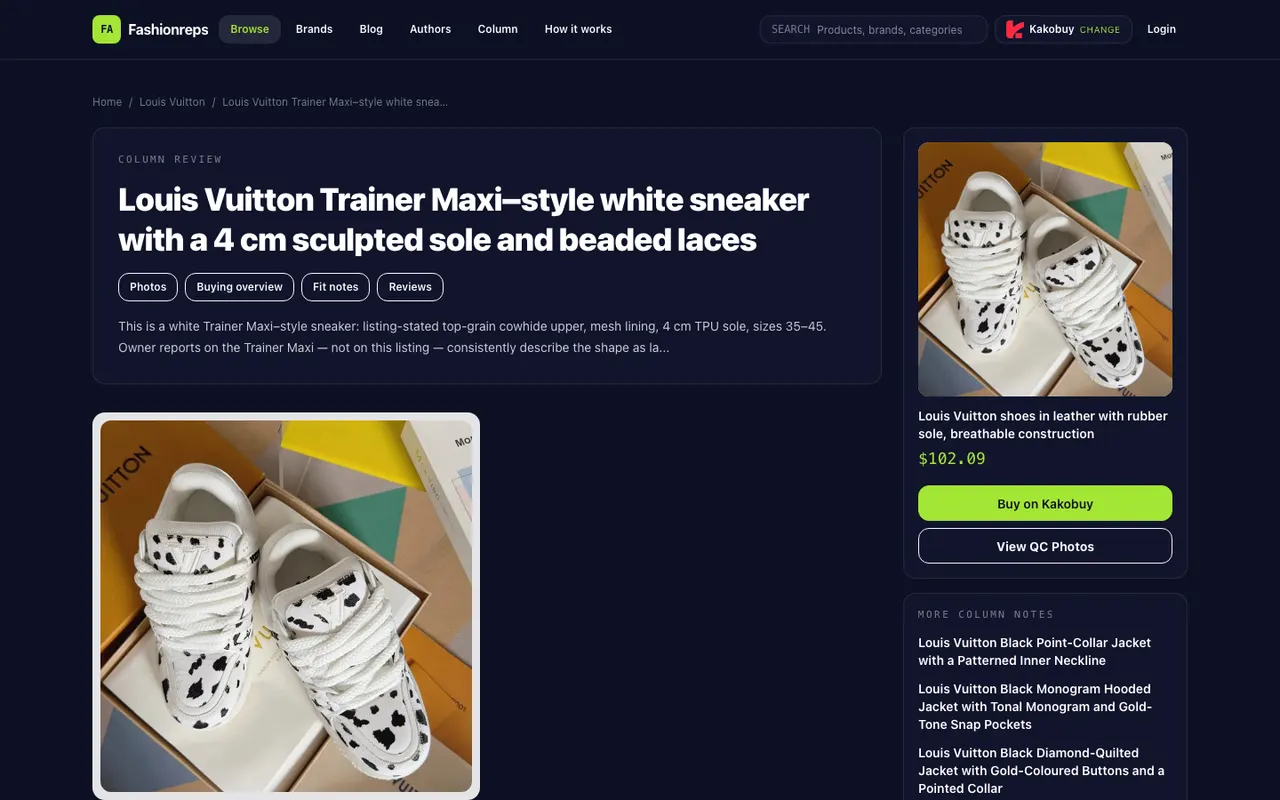
If you're looking at a Louis Vuitton Trainer Maxi–style white sneaker, the first thing to assess isn't just how it looks, but whether the shoe fits your foot shape, and whether the heel, lace accessories, and sole construction need further confirmation. The current product page lists a top-grain leather upper, mesh lining, 4 cm TPU outsole, and sizes 35–45; but feedback on width, weight, and heel stability mainly comes from Trainer Maxi series buyer descriptions, not independent testing of this specific link.
What to Check First on the Page Specs
The page describes this shoe as Trainer Maxi style, with a top-grain leather upper, breathable mesh lining, a 4 cm outsole height, and a size range of 35–45. The page also labels 35–41 as the women's range and 39–45 as the men's range, so some sizes overlap, and you can't choose based solely on gender classification.
The page shows a reference price of $102.09, but the final product price, service fees, and international shipping need to be confirmed with the shopping agent website. Current information is insufficient to determine current stock, final landed cost, or actual shipping, and the reference price should not be treated as the settlement amount.
Wide Fit and Heel Suitability
Existing Trainer Maxi series feedback generally points to a wider, larger fit. Some buyers feel it runs about half a size to a full size larger than the regular LV Trainer, and narrow feet usually need to size down; wide feet may stay true to size. Some buyers also found it fits well in their usual size, but such feedback cannot replace insole length measurements for this specific model.
If you have a low instep or narrow heel, pay close attention to whether there's excess room in the heel. Some buyers mention the shoe is very big and heavy, and they need to tighten the laces to reduce heel slippage. The bead embellishments on the laces may be loose when shipped, and before adjustment, they can worsen the slipping issue.
Before ordering, it's recommended to directly request the following data from the seller:
- Insole length and footbed length for the corresponding size
- Width at the widest part of the toe box and forefoot width
- Inner heel length and heel cup fit
- Front, side, and heel photos after laces are tightened
- Weight of one shoe or the pair
This data is more useful than just the 35–45 size range for judging whether your foot will slide forward and backward inside the shoe.
Sole Height and Wear Scenarios
The 4 cm TPU outsole is a key visual and structural feature of this shoe. It gives a more pronounced platform proportion, and also means this isn't a subtle, low-profile everyday sneaker option. If you prefer a low center of gravity or lightweight shoe, you need to consider the shoe's weight and sole height together.
Existing feedback places it better in dry, urban casual settings. Sources note that leather and heavier embellishments are not suitable for rainy days or rough terrain. For care, use a soft cloth, avoid rain and strong cleaning agents; when deep cleaning is needed, remove the laces first to reduce the chance of snagging the beads.
How to Inspect Lace Beads and QC Photos
The lace details are not just decorative; they also affect heel lockdown. Buyer feedback mentions the beads may be loose, and some feel the plastic beads look like cheap toy accessories. Therefore, QC photos should focus on the bead arrangement, surface gloss, hole alignment, and symmetry between the two shoes, not just confirming the laces exist.
It's suggested to ask the seller to supplement or confirm the following angles:
- Both shoes side by side from the front, to check toe shape and lace bead symmetry
- Left and right side profiles, to confirm sole height, edge bonding, and leather creasing
- Heel from the front and rear side, to observe heel height and whether the collar is skewed
- Close-up of the sole edge, to look for obvious glue overflow, open seams, or edge separation
- Insole and insole length measurement photos, to confirm size data
Regarding possible glue smell or outsole separation in low-priced replica grades, existing materials only provide grade hints not specific to the Trainer Maxi, so it cannot be concluded that this particular item will definitely have the same issues. A safer approach is to list outsole edges and glue lines as separate QC inspection items.
What Kind of Buyer Is This Suitable For
This shoe is more suitable for buyers who want a roomy fit, platform proportion, and prominent decorative details, and who are willing to confirm size data before purchase. Wide-foot buyers may adapt more easily to its volume, but should still confirm insole length and heel fit.
If you prefer a low-top, lightweight, low-key shoe, or need it for rainy days and rough terrain, the 4 cm outsole, larger shoe volume, heavier embellishments, and leather care requirements may not match. Narrow-foot buyers especially should not order directly in their usual size without first comparing insole length, footbed length, and heel photos.
Overall, the focus of judgment can follow this order: first confirm the measured length for the corresponding size, then look at forefoot width and heel cup, next check the lace beads and tightened state, and finally examine the sole edges and QC details. Existing page information can support specs and series-level feedback, but is not sufficient to replace independent testing of this specific item, so the final decision should be based on the seller-provided size and photos for this particular product.