Kakobuy Crossbody Bag Link Check: Direct vs Sheet Records
Kakobuy Crossbody Bag Link Check: Direct vs Sheet Records
The key to checking crossbody bag links is not just confirming the page opens, but ensuring the product card, images, colors, versions, and spreadsheet records all point to the same page. A mismatch can cause subsequent searches, orders, warehouse inspections, and customer service communications to revolve around the wrong item.
This article is for readers who have already found candidate crossbody bag pages and need to organize links and hand them off to the next person. After reading, you should be able to perform a traceable link confirmation; if the page itself lacks clear title, images, or version information, you should not mark it as verified. 🔎
This article only discusses link and record checking, and does not involve product recommendations, price judgments, brand judgments, or styling advice. Page information is time-sensitive, and the verification date is October 9, 2026.
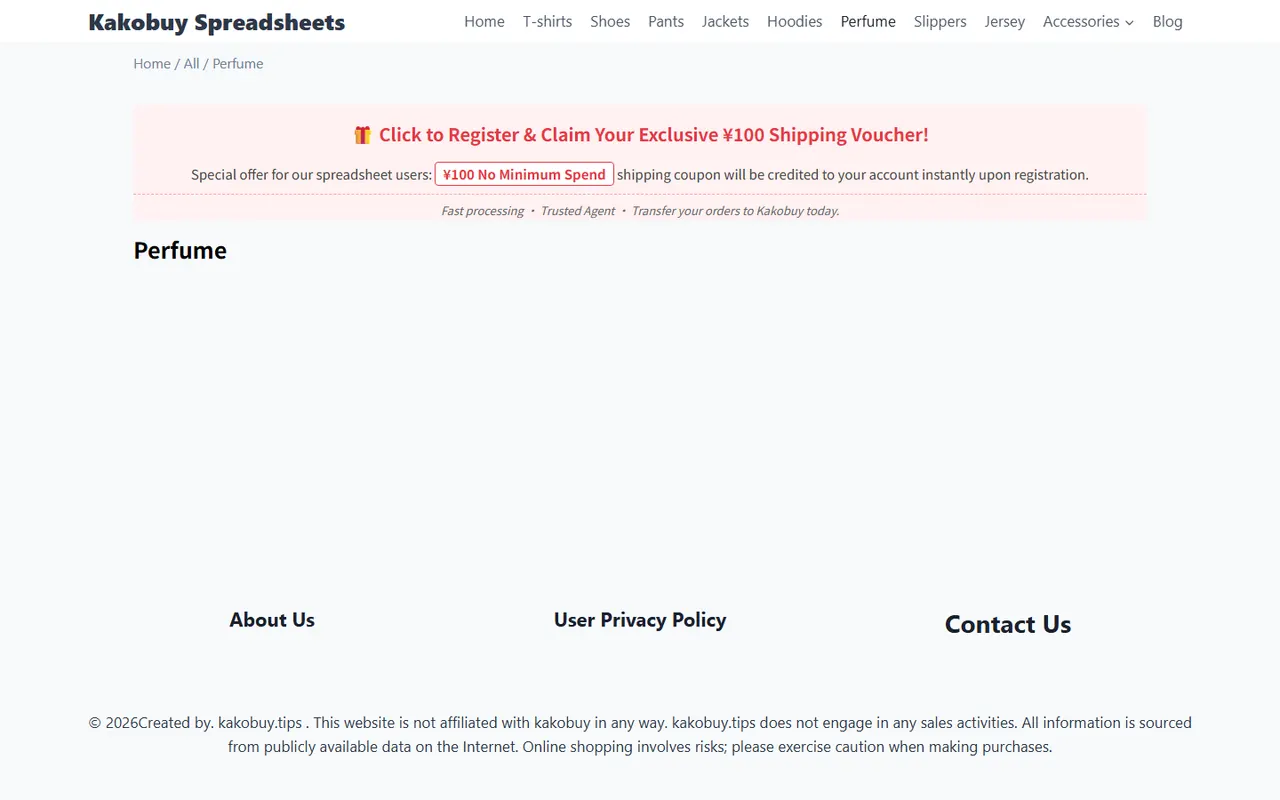
Image: A page example used to confirm the scope of category browsing and records. The image is only a structural reference and does not imply that any specific product has passed quality verification.
First, clarify what mismatches to avoid when checking crossbody bag links
There are three common types of errors.
The first is similar titles but different pages. Two pages may both use the category description "crossbody bag," but the colors, sizes, materials, accessories, or seller versions are not the same.
The second is images not matching links. The spreadsheet stores one page, but the thumbnail next to it is from another page. This type of error is especially easy to overlook when images look similar.
The third is old links continuing to be treated as current links. Pages may redirect, update, be delisted, or have missing content, so "opened before" does not mean "still verifiable now."
A qualified check must answer at least four questions:
- Does the page open normally?
- Does the page title match the product card record?
- Do the page images, colors, and versions match the record?
- Has the verification time and processing status of this link been written into the spreadsheet?
If any of these cannot be confirmed, it should be recorded as "pending evidence" rather than directly marked as "passed."
How to check the title, images, and direct entry in Kakobuy product cards
Start with the product card, not by working backwards from old links in the spreadsheet. The card should be the starting point for this verification, while the spreadsheet is responsible for saving results and historical changes.
It's recommended to check in the following order:
- Record the product title shown on the card, preserving the original capitalization and main description.
- Check the card images to confirm the subject, color, and angle match the images in the record.
- Use the direct entry provided on the card to open the page, not just copying the address from browser history.
- After the page finishes loading, verify the title and visible style information on the page.
- Write the results of this opening back to the spreadsheet, and note the verification date.
If the card only has images without enough text information, do not fill in colors, materials, or sizes on your own. You can write "insufficient card information" in the notes and list the fields that need to be supplemented. This way, subsequent personnel can know exactly what is missing, rather than assuming these details have been confirmed. ✅
Whether an official page can display a certain field should be based on the currently visible page or provided official screenshots. Do not infer that a Kakobuy page must have the same buttons or information just because other shopping sites typically display a certain field.
How to separately record product links, versions, and update times in Google Sheets
Google Sheets is better suited for saving verification results, not for replacing page browsing. Spreadsheet fields should be split as much as possible, avoiding cramming the title, link, version, and notes all into one cell.
| Field | Suggested Content | Purpose |
|---|---|---|
| Product card title | The title actually displayed on the page or card | As the initial identification text |
| Product link | The address entered from the card and verified this time | To distinguish the current entry from old records |
| Image identification notes | Visible information such as color, pattern, appearance differences | To prevent confusion between similar pages |
| Version identifier | Model, specification, or other distinguishing information clearly displayed on the page | To handle multiple versions on the same page |
| Link status | Opened, redirect anomaly, insufficient information, or pending review | To reflect the current processing result |
| Verification date | The actual date of this check | To determine if the record is outdated |
| Next step | Need to supplement images, reopen, or assign to someone | To facilitate handoff |
Links and versions must be in separate columns. Do not write "old version link" or "new version link" only in the notes, and do not use color coding instead of text status, because colors may be lost when copying, filtering, or exporting.
If the same page contains multiple clear versions, keep the same page address and record them separately in the version field. If different versions actually correspond to different pages, create a separate record for each page to avoid later mistaking one address as covering all versions.
After opening the link, how to confirm the closure, compartments, and color correspondence
After opening the link, only verify information that is directly visible or clearly written on the page. For closure method, internal compartments, and color, record them separately, and do not use a vague "style matches" instead.
You can use a three-step method:
- Appearance check: Compare the main image on the page with the card image for color, silhouette, and main visual features.
- Structure check: Check whether the page clearly shows or describes the closure method, compartments, and internal areas.
- Version check: Check whether options, images, or text indicate multiple colors, sizes, or versions.
If the page only shows appearance images but does not clearly show the internal structure, do not infer the existence of a compartment. You can write "internal structure not confirmed from current page." Similarly, when the color name does not match the image impression, prioritize recording the actual text on the page and put the image discrepancy in the notes.
Do not expand image observations into conclusions about material, durability, or quality. Link checking can only confirm page correspondence and cannot replace the appearance inspection after arrival or the platform's prescribed inspection process. 📋
How to create distinguishing fields for similar products or different versions of the same style
Similar pages most need stable distinguishing fields. It is recommended to use a combination of "original title + visible version information + image notes + verification date" rather than assigning short names to pages from memory.
For the same style in different colors, you can record the color name clearly displayed on the page in the color field, and write visible differences in the image notes. For the same style in different sizes, size should be an independent field. For pages without a clear version name, you can use "version identifier not displayed" and do not create model numbers on your own.
If two pages have similar titles but different images or options, they should be saved separately and marked as "requires manual distinction." Only when the page information and card entry both correspond can they be merged into one record.
Recommended status terms should remain fixed, for example:
- Pending verification: The current entry has not been opened yet.
- Opened: The page is accessible, but some fields are still missing.
- Verified: Title, entry, and main visible information are consistent.
- Insufficient information: The page is accessible, but key fields cannot be confirmed.
- Link anomaly: The page cannot open normally or has an abnormal redirect.
- Pending review: The page content has changed, or existing records are inconsistent with the current page.
Unified status terms are more suitable for filtering and handoff than free text like "should be fine" or "looks the same."
Handling order when links are broken, redirects are abnormal, and information is missing
When encountering anomalies, do not immediately overwrite the original link. First preserve the original record, then create a new verification result.
The handling order can be:
- Enter again from the product card to rule out problems caused by incomplete copying or old tabs.
- Check whether the page still displays a title and enough identifying information.
- Record whether a redirect occurred and whether the page after the redirect still corresponds to the original card.
- Compare with the old title, image notes, and version fields in the spreadsheet.
- If still unable to confirm, change the status to "insufficient information" or "link anomaly."
- In the next step field, write what evidence needs to be supplemented; do not fill in guesses.
When a page redirects to a category page, blank page, or unrecognizable page, do not treat the redirect target as the original product page. If the page opens but the title, images, or version information are clearly missing, do not mark it as verified just because the address is accessible.
Before handoff, at least keep the original link, current status, last verification date, and anomaly description. This way, even if the page changes later, the basis for the judgment at that time can be traced. ⚠️
What stages are suitable for website browsing and spreadsheet tracking respectively?
Website browsing is suitable for confirming current page facts: whether the title exists, whether images correspond, whether versions are visible, and whether the link opens normally. It reflects the current page status.
Spreadsheet tracking is suitable for saving relationships between multiple pages: which records have been verified, which have anomalies, which day was checked, and what the next handler needs to supplement. It reflects work status and historical changes.
The two cannot replace each other. Only browsing without recording can lead to repeated checks or treating old pages as new pages; only maintaining the spreadsheet without reopening can keep invalid addresses. The safest approach is to "open from the current card first, then write the results back to the spreadsheet," rather than batch inferring page status from spreadsheet content.
Final action: Complete the crossbody bag link confirmation and handoff checklist
Before completing a record, confirm item by item:
- The product card title has been recorded as is.
- The direct entry has actually been opened.
- The page title has no obvious mismatch with the card record.
- The color or main appearance in the image matches the record.
- Closure, compartments, and version information only include content clearly displayed on the page.
- Link, version, status, and update time have been saved in separate columns.
- Abnormal pages have not been mistakenly marked as verified.
- The original link and review results are preserved for future traceability.
The savings after completion mainly come from reducing repeated browsing, repeated questioning, and incorrect handoffs; the increased risk is that old records may still become outdated after page updates. Therefore, it is suitable for people who need to organize multiple candidate pages, collaborate with multiple people, or process in stages. It is not recommended to continue subsequent operations based solely on spreadsheet records when page information is insufficient, link sources are unknown, or versions cannot be distinguished.
Completion of verification does not mean that product quality, inventory, price, or after-sales results have been confirmed. It only indicates that a traceable correspondence has been established between the current page and the spreadsheet record.
Article images

Agent platform shopping FAQ
1. What approach should I use to evaluate product quality on kakobuy?
To gauge product quality, concentrate on the QC photos since factory-provided images are frequently edited. Utilize the QC photos to verify that the item aligns with your detailed specifications before completing your purchase on kakobuy. Additionally, be cautious about buying products with extremely low prices, because they often lack good quality.
2. How can I locate products I want to buy on kakobuy?
On kakobuy, you can either enter a single keyword in the search bar or navigate to a category page where brands are sorted. Longer search queries usually yield fewer but more accurate results compared to shorter ones. For instance, you might search for "Air Force 1 White," "sneakers," or just "Air Force 1."
3. What should I look at when examining kakobuy QC photos?
When reviewing QC photos on kakobuy, pay attention to the specific attributes of your purchased item. For shoes, check areas like the toe, heel, and tongue to assess stitching quality, structural integrity, and tongue thickness, which help determine overall quality. For clothing, examine the neck label, logo embroidery, fabric texture, and the smoothness of the collar and cuffs, along with other details.
4. What is the reason for not using Google Sheets on kakobuy?
Google Sheets works only for spreadsheets containing a small number of products. As product counts grow, loading becomes sluggish and the system lags noticeably. On mobile devices, the visual layout is especially poor and searching for products is very inconvenient. For identical product sets, kakobuy's website spreadsheet offers faster loading and an improved visual experience.